
// capability 04 · threads and flush seats
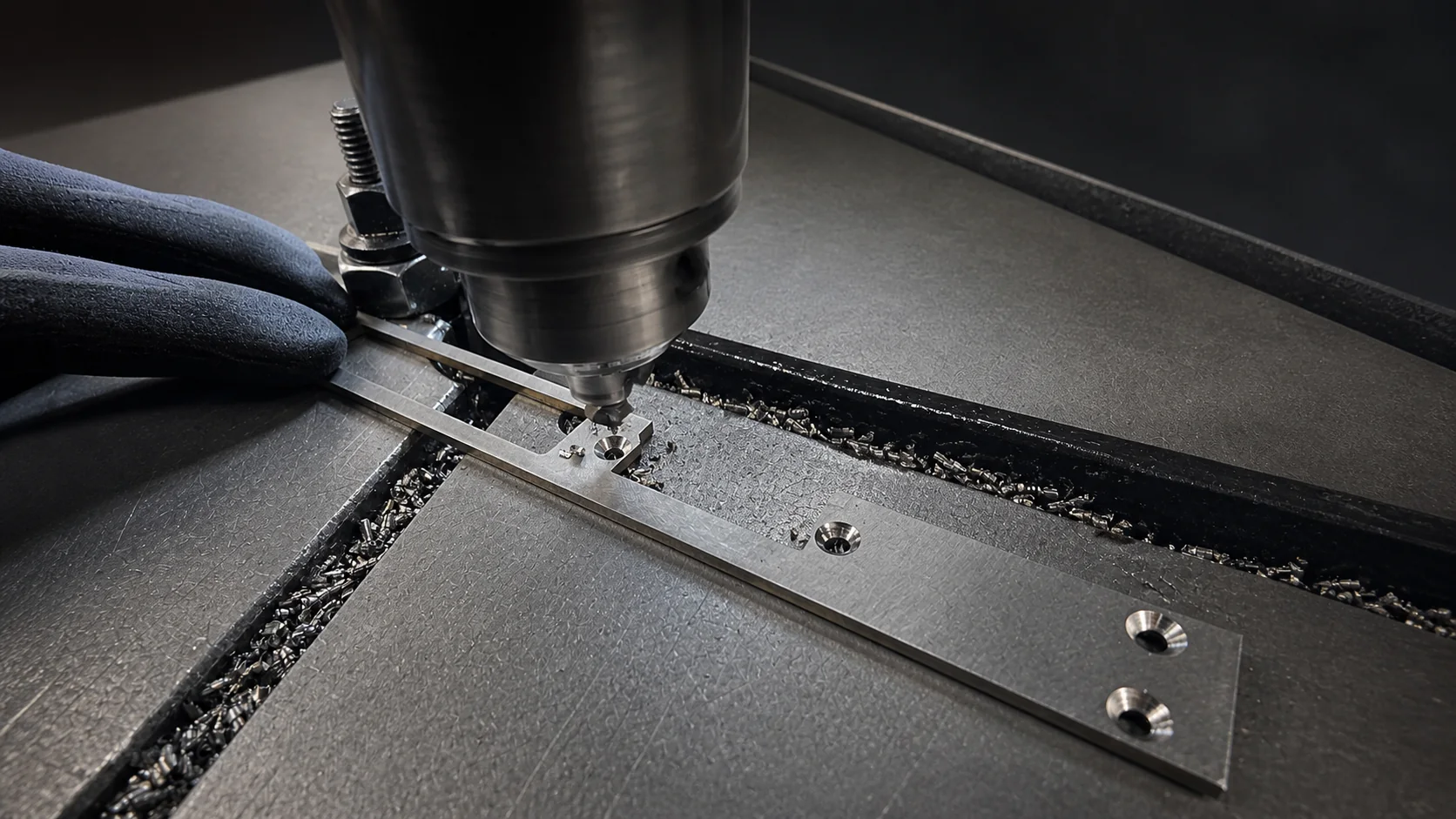
Tapping & countersinking, completed in-house.
Add reliable internal threads and controlled seats for countersunk fasteners after cutting, with the material, hole and downstream finish considered as one manufacturing route.
What we offer
We tap specified holes and produce countersunk seats as part of complete fabricated jobs, from prototypes to repeat batches. The operation is planned after laser cutting and before hardware fitting, welding or coating, so the part follows a controlled sequence.
Tell us the thread designation and pitch, fastener type, quantity and any critical depth or flushness requirement. We check access, material thickness and the finished assembly before confirming the route.
Why choose tapping?
A tapped hole puts the thread directly into the parent material. It is simple, neat and useful where the material provides enough thread engagement, especially in thicker sheet, plate, blocks and formed features.
Thin sheet may not offer enough engagement for the load or service life. In that case a press-fit insert or rivet nut can provide a stronger captive thread without pretending that every hole should be tapped.
Why choose countersinking?
Countersinking lets a compatible flat-head fastener sit flush or below the surface. That is useful for sliding interfaces, clean visible faces, close-fitting assemblies and places where a projecting screw head would interfere.
The seat angle, head diameter, material thickness and finish all matter. A deep countersink in thin sheet can leave too little material, while powder coat can change a close flush fit; we review both before manufacture.
Designing tapped and countersunk features
A clear drawing prevents thread, depth and fastener assumptions from reaching the workshop.
Call out the complete thread
State the thread standard, nominal size and pitch, and say whether the hole is through or blind. Mark any unusual depth, fit or positional tolerance explicitly.
Leave enough material
Thread engagement and countersink depth must suit the sheet or plate thickness. We can suggest an insert, rivet nut or design change when direct machining is not robust.
Name the mating fastener
For a countersink, identify the fastener standard or included angle and whether the head must be flush. Do not dimension only the top diameter and leave the intended fit unclear.
What to send
Include a STEP model or DXF where available, plus a PDF drawing that calls out the threads, countersinks, critical dimensions, quantity, material and finish. If the part must accept a specific screw, send its standard or a sample.
What follows
Once secondary machining is complete, the same team can add inserts, rivet nuts and blind rivets, continue into welding and assembly, and protect the finished part with powder coating.
Show us the fastener and the finished fit
We will choose a practical hole, machining and assembly route around how the part actually needs to work.