
// capability 07 · finish and protection
A durable finish, applied in-house.
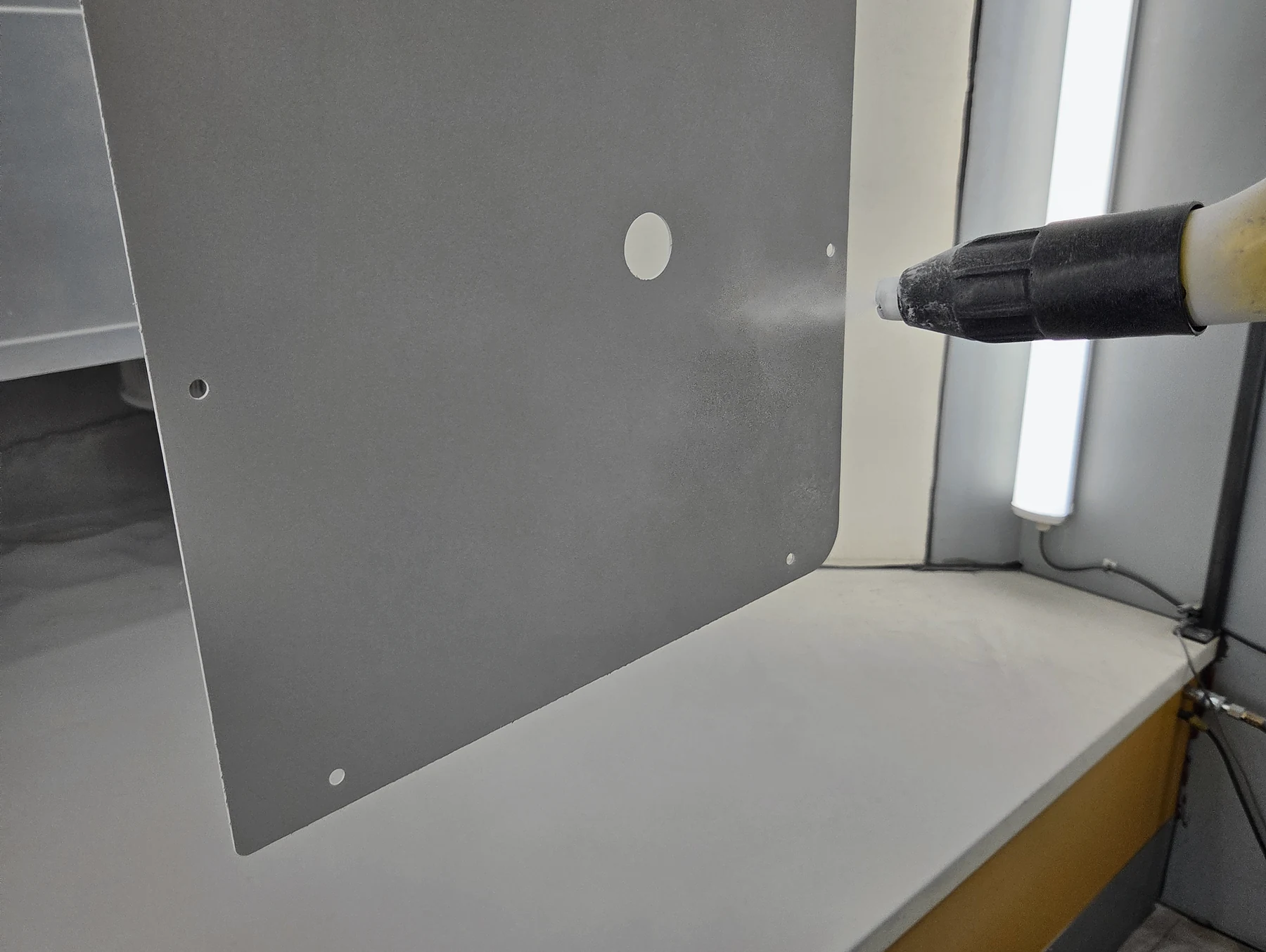
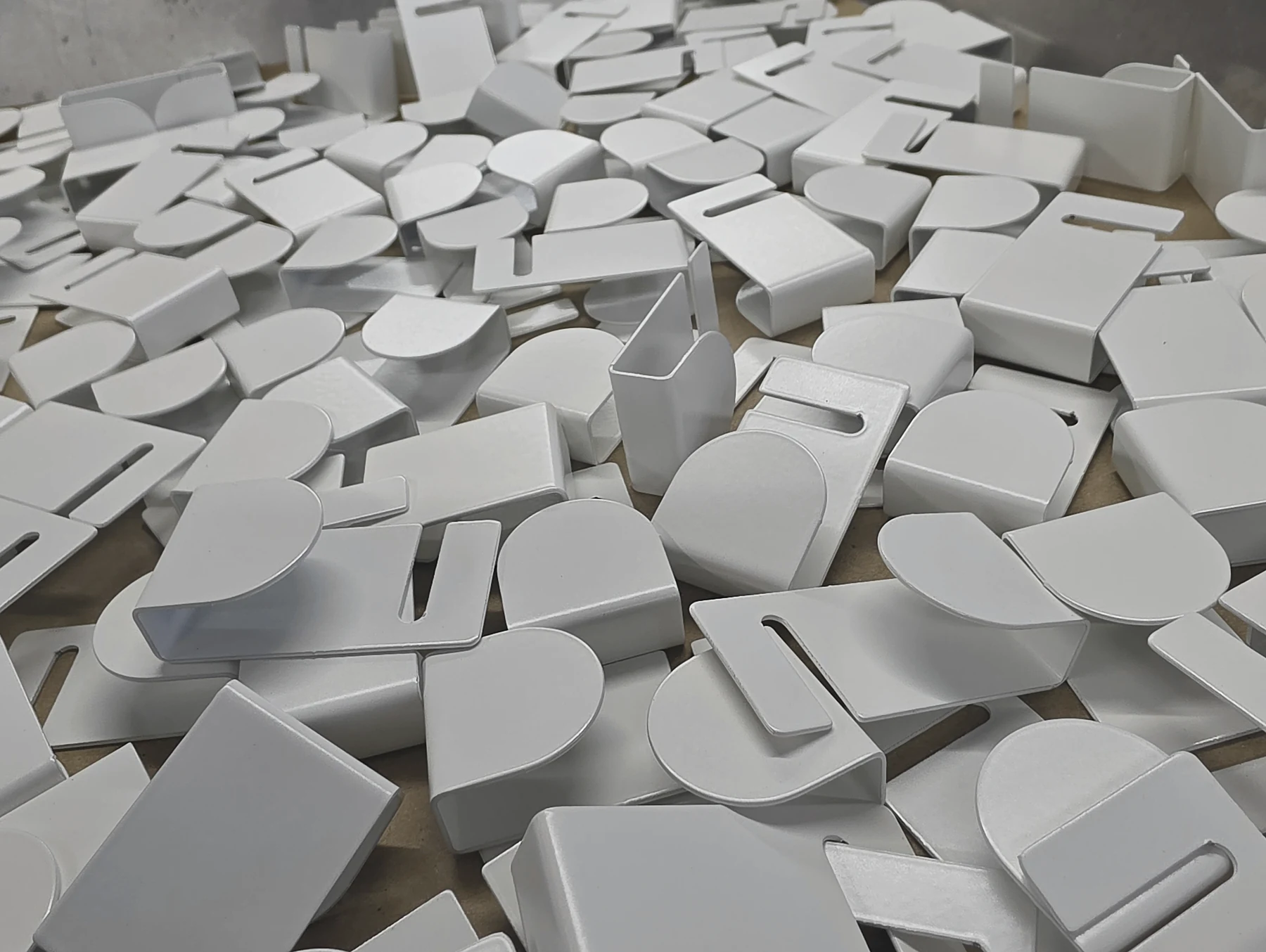
Powder coating gives fabricated metalwork a consistent protective and decorative finish. Keeping it within the same route means colour, visible faces, hanging, masking and close fits can be considered while the part is still being designed and made.
What we offer
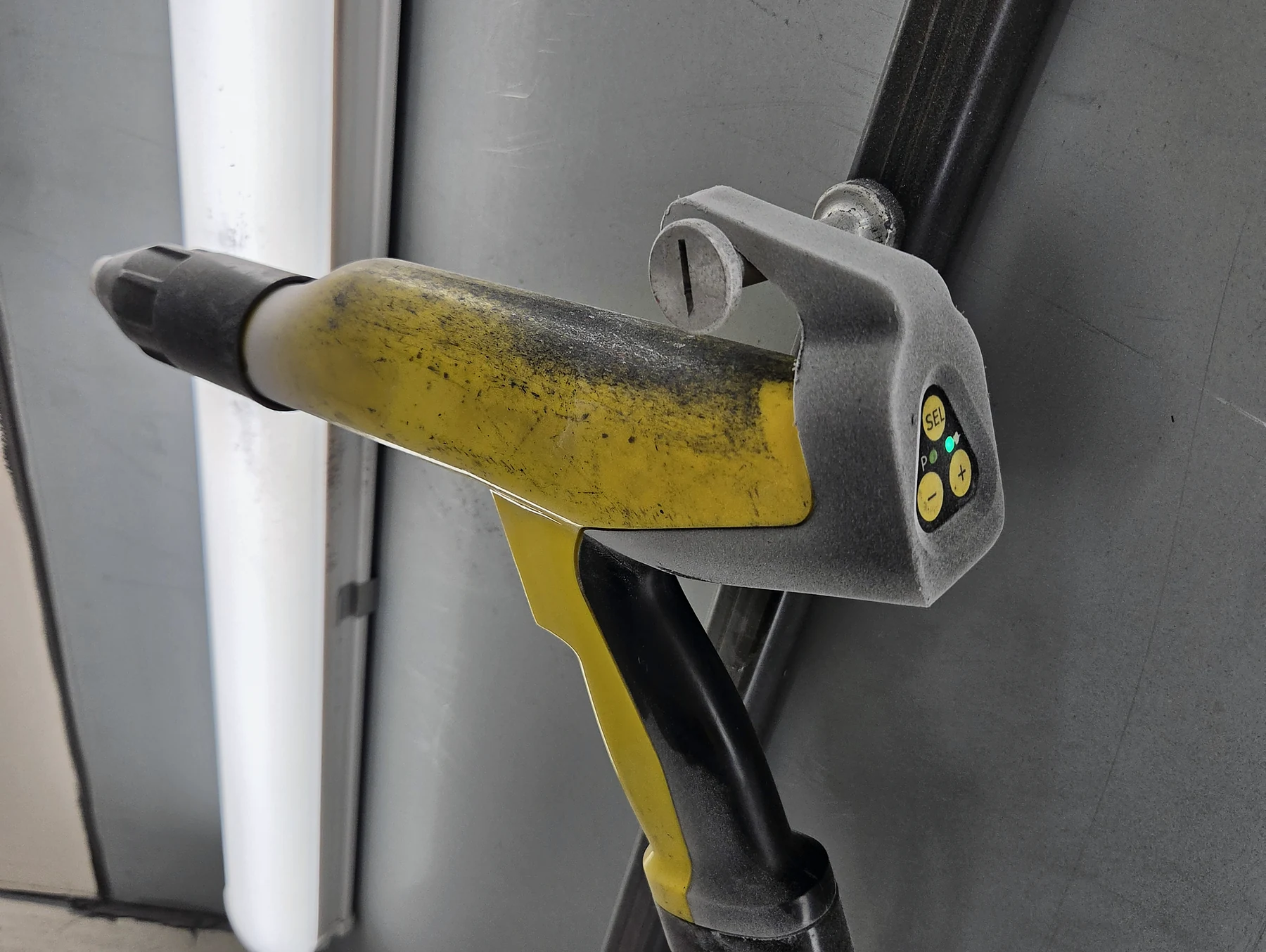
We powder coat fabricated parts and assemblies in-house across a wide choice of RAL colours and common matt, satin, gloss and textured finishes. Coating can be combined with our cutting, forming, fitted hardware and welding so the item arrives inspected and ready for its next use.
Mechanical finishes for stainless and other agreed finish routes can also be discussed where powder coating is not the right answer.
Why choose powder coating?
It provides a consistent coloured surface without wet-paint runs and is well suited to brackets, panels, housings, frames, guards, furniture and exterior metalwork when the substrate preparation and coating system suit the environment.
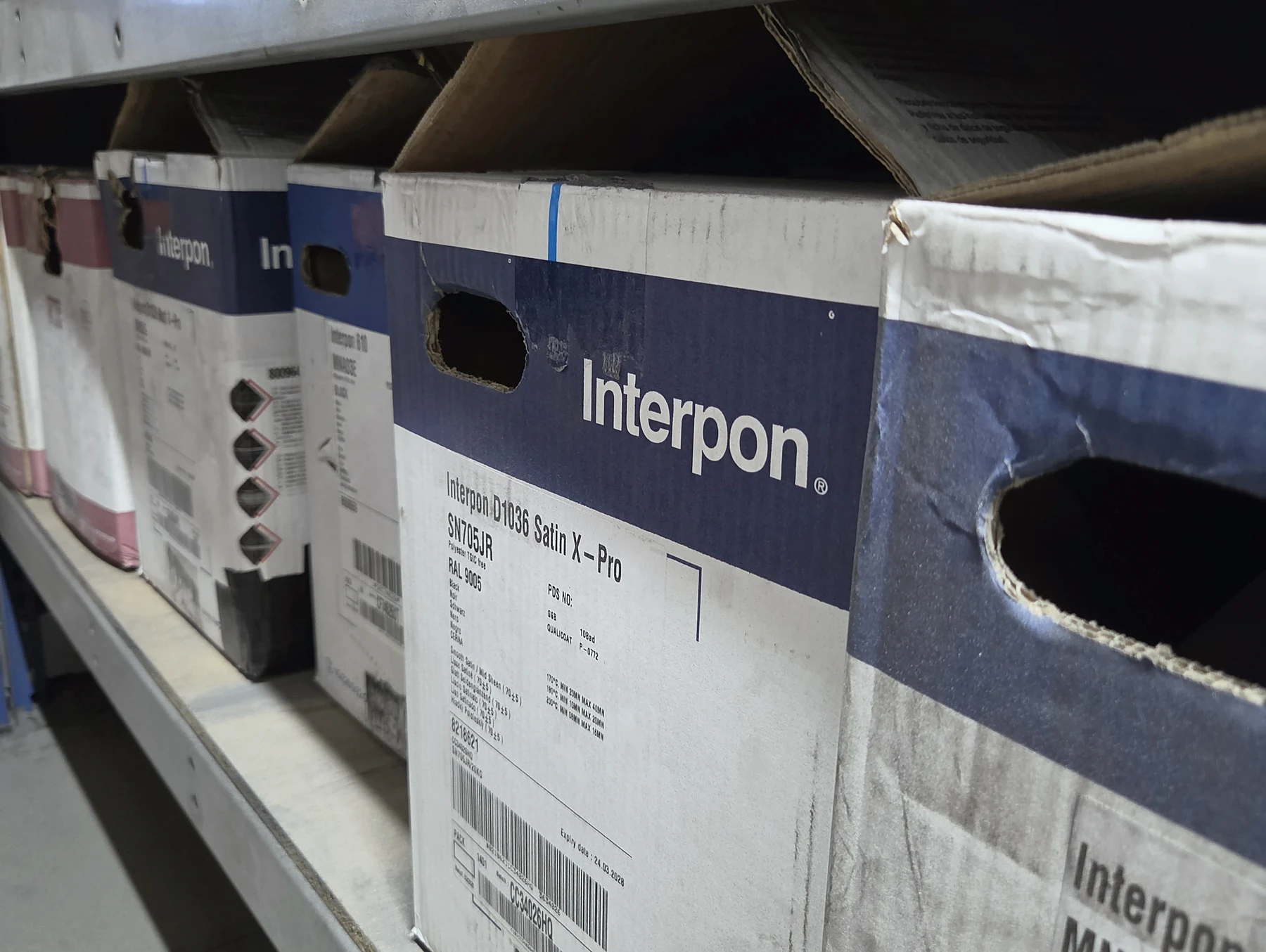
Colour, texture and sheen affect appearance as much as the drawing, so samples or an agreed RAL reference are useful when the finish must match surrounding work.
Designing for powder coating
Treat coating as part of the component, not an instruction added at the end. It changes how parts hang, drain, earth, assemble and fit.
Choose colour, sheen and texture
Specify the RAL reference and finish family rather than relying on a screen colour. For matching work, note the existing coating and whether batch-to-batch appearance is critical.
Identify masking and close fits
Threads, earth points, bearing surfaces and tight mating features may need masking or post-finish attention. Allow for coating build where components slide, hinge or locate closely.
Provide hanging, venting and drainage
Parts need a safe way to hang and orientations that do not trap preparation fluid, air or powder. Closed sections and cavities may need clearly placed vent or drain features.
Surface condition matters
Laser scale, weld spatter, sharp burrs, grease and inconsistent dressing can show through or weaken the finished result. The substrate, use environment and required appearance determine the sensible preparation and finish route.
For exterior or demanding service, tell us where and how the item will be used. Powder coat is a system, and the right preparation is as important as the chosen colour.
Show visible faces and interfaces
Mark cosmetic faces, areas hidden after assembly, contact points and features that must remain uncoated. If different parts assemble after coating, provide the interface and clearance requirements rather than only the nominal CAD geometry.
Our powder-coat finish guide gives more help with colour, sheen and texture choices.
Plan the sequence once
The best finish depends on what happened before it and what happens after it.
Confirm the finish
Colour, sheen, texture, environment, visible faces and acceptance expectations.
Design the part
Add suitable access, hanging, venting, drainage, masking and assembly clearances.
Fabricate cleanly
Control burrs, weld spatter, dressing and handling before surface preparation.
Coat and inspect
Apply the agreed finish, remove masking and check appearance before dispatch.
Quote the part with the finish included
Send the drawing, material, quantity, colour or finish reference, visible faces, masking points and use environment. We will plan coating with the fabrication—not after it.