
// capability 04 · flexible, repeatable forming
Folding
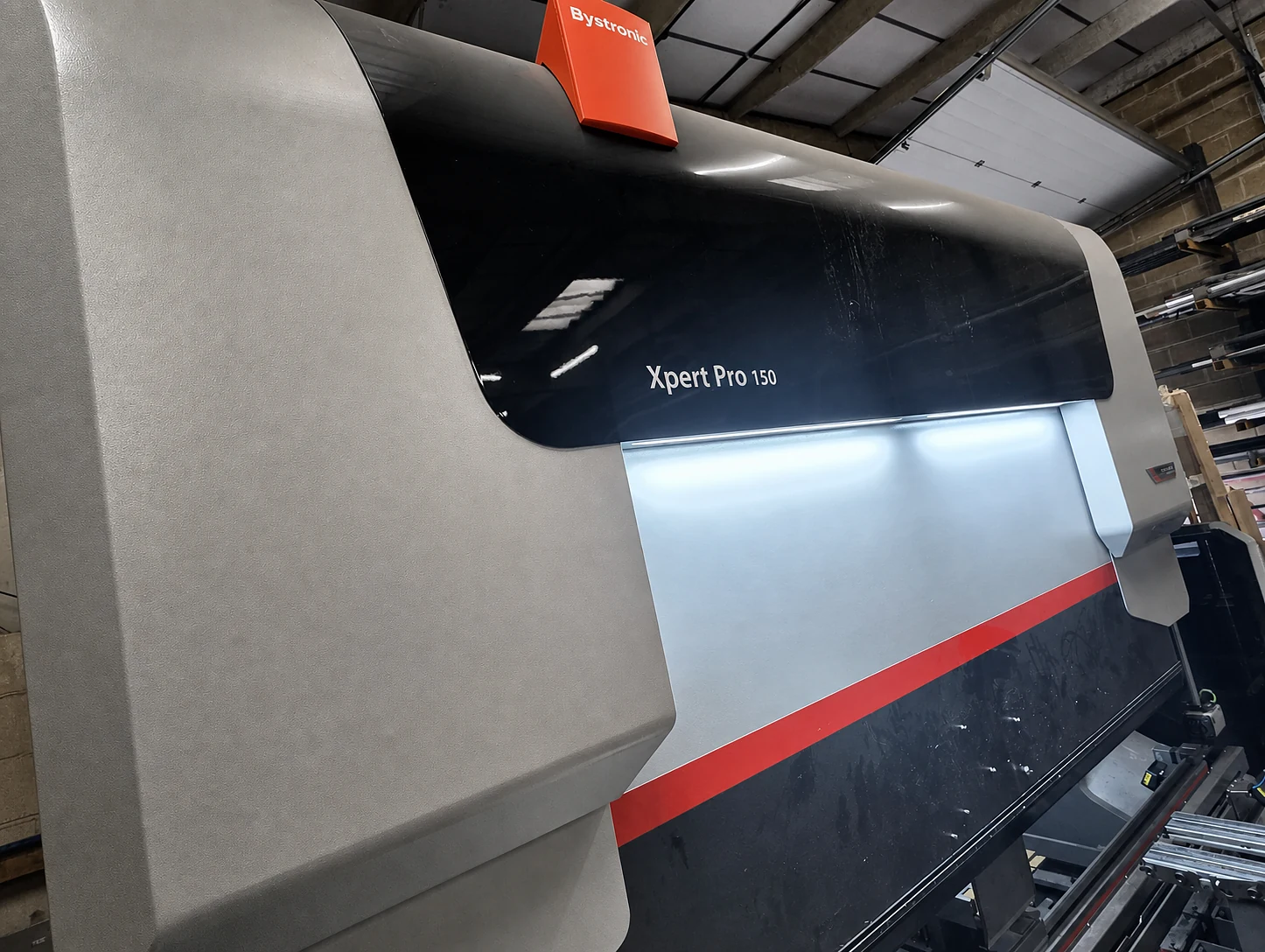
Cutting-edge press brakes with 3D control and simulation, and robotic automation for high-volume jobs
What we offer
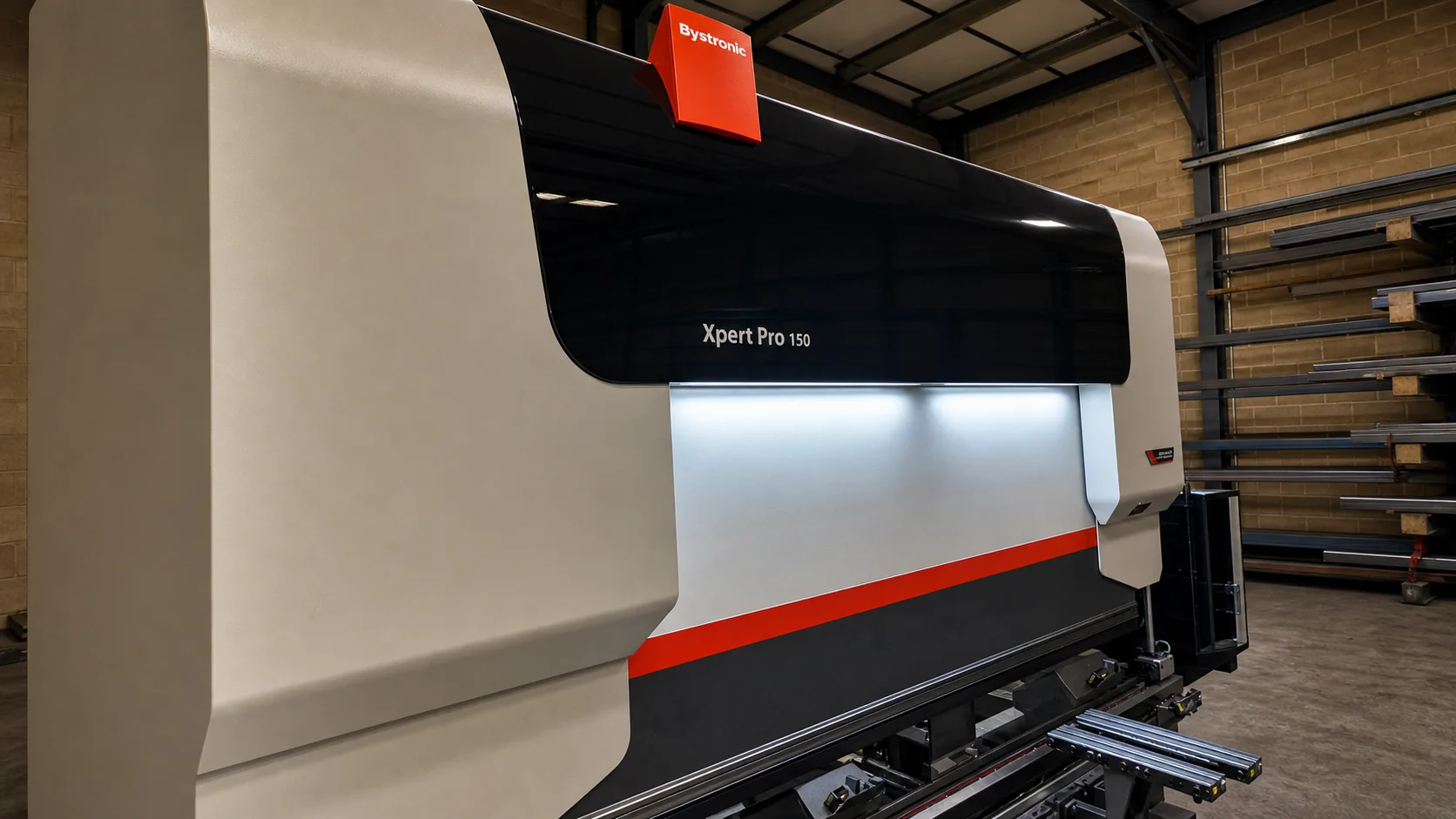
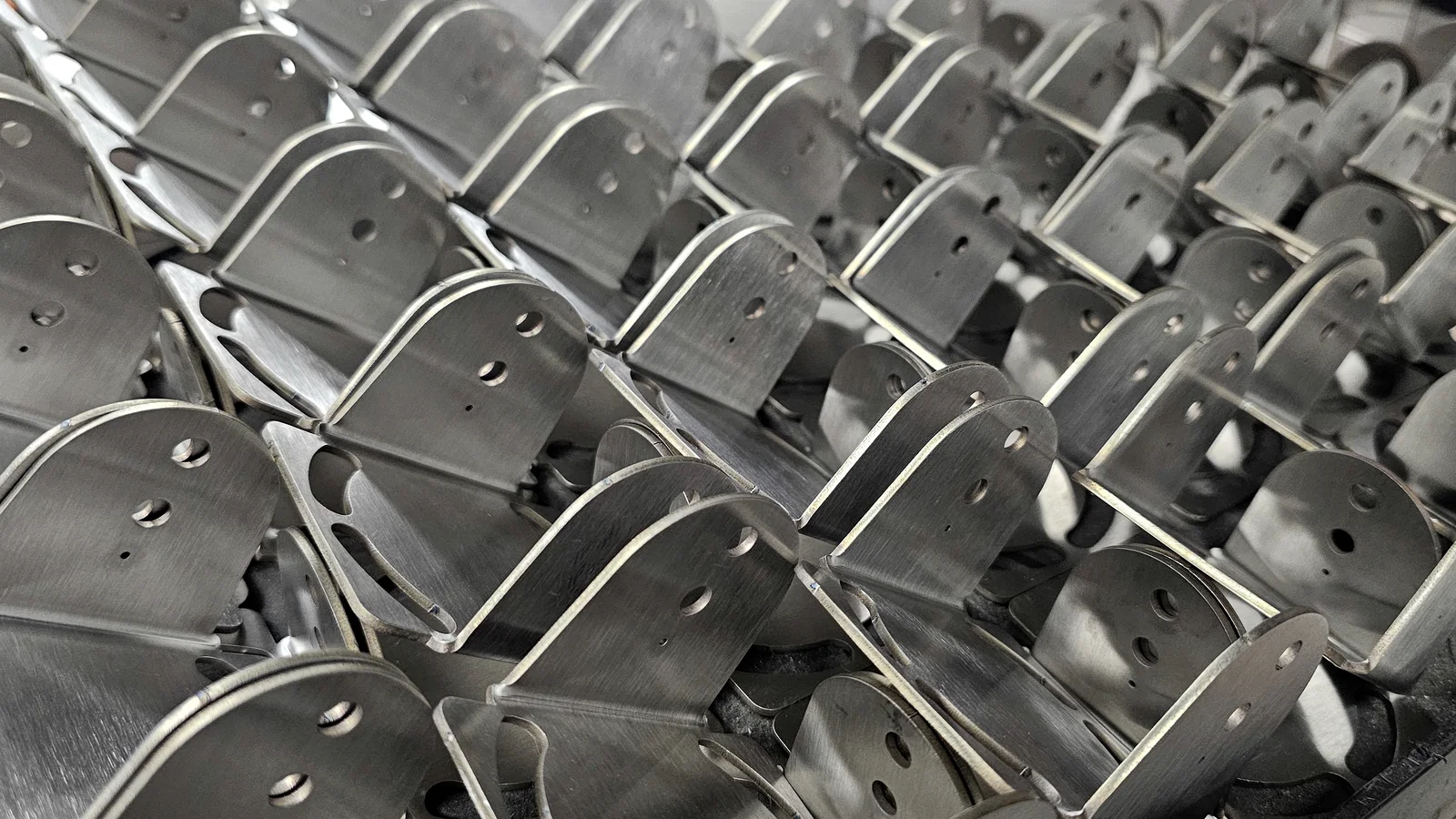
We form mild steel, stainless and aluminium parts on three top-spec Bystronic press brakes as part of one connected fabrication route. Typical work includes angles, channels, trays, guards, covers, brackets, panels, chassis and enclosures, from a first prototype through to repeat batches. We typically fold a very high mix of parts and materials with complex 3D geometry.
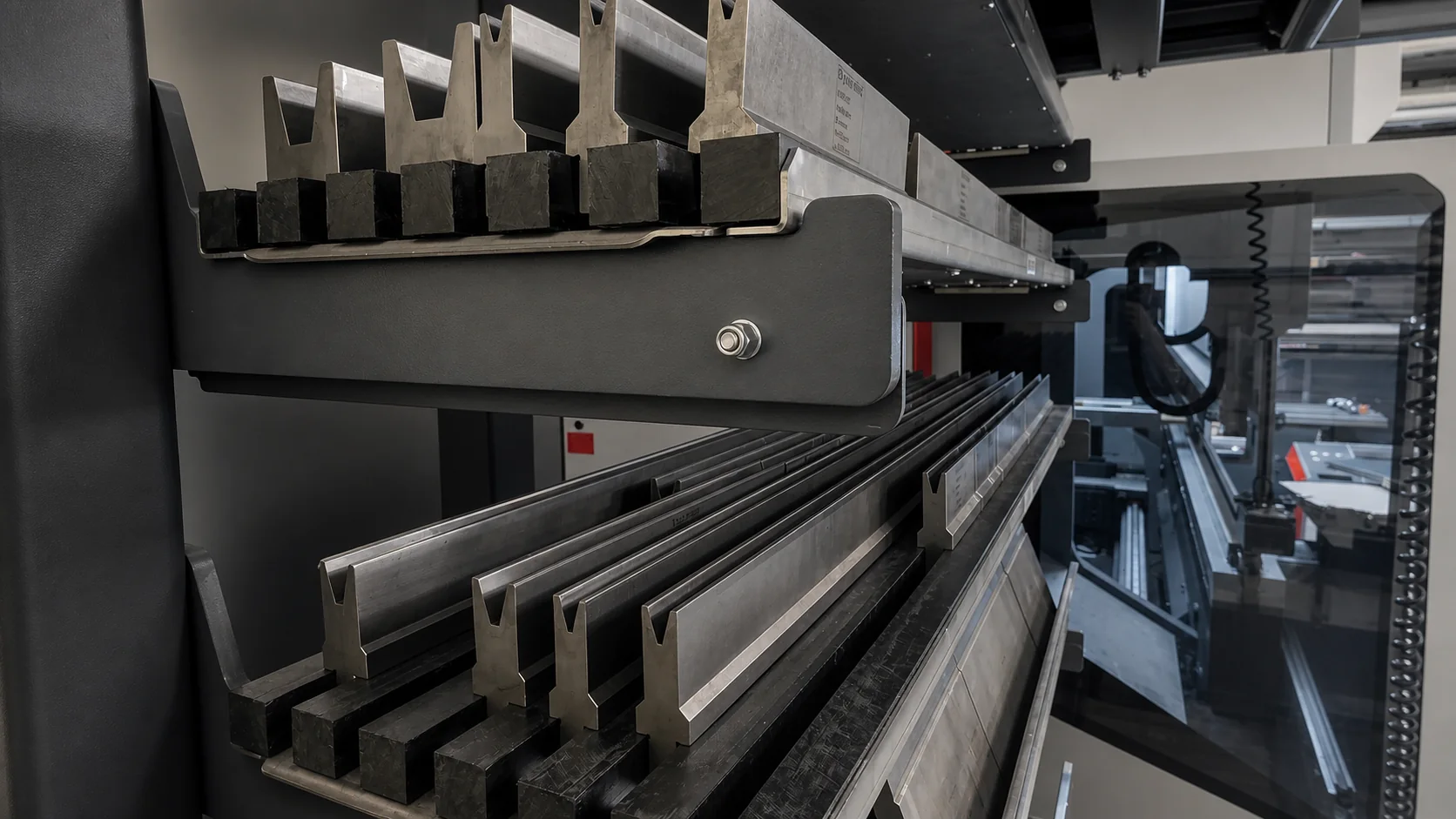
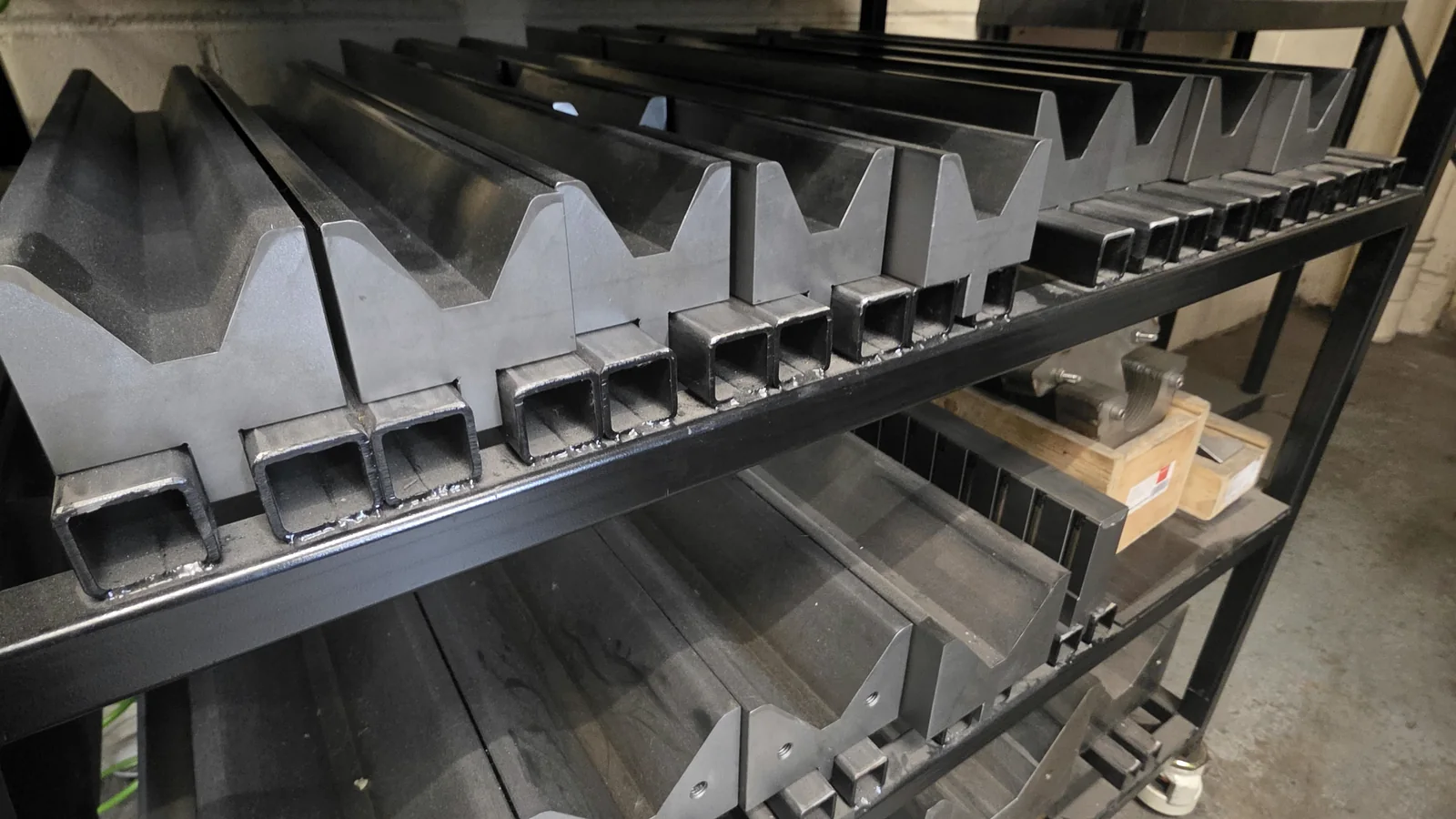
Our software pre-programs the parts, which are then fine tuned at the machine by our skilled operators. We have extra large daylight machines, with extensive tooling options for folding complex parts.
Why choose folding?
Press-brake forming is flexible: it can prove a one-off, respond to design changes and repeat controlled folds across a production run. A formed feature can replace a welded joint, stiffen a panel or turn several flat pieces into one simpler component.
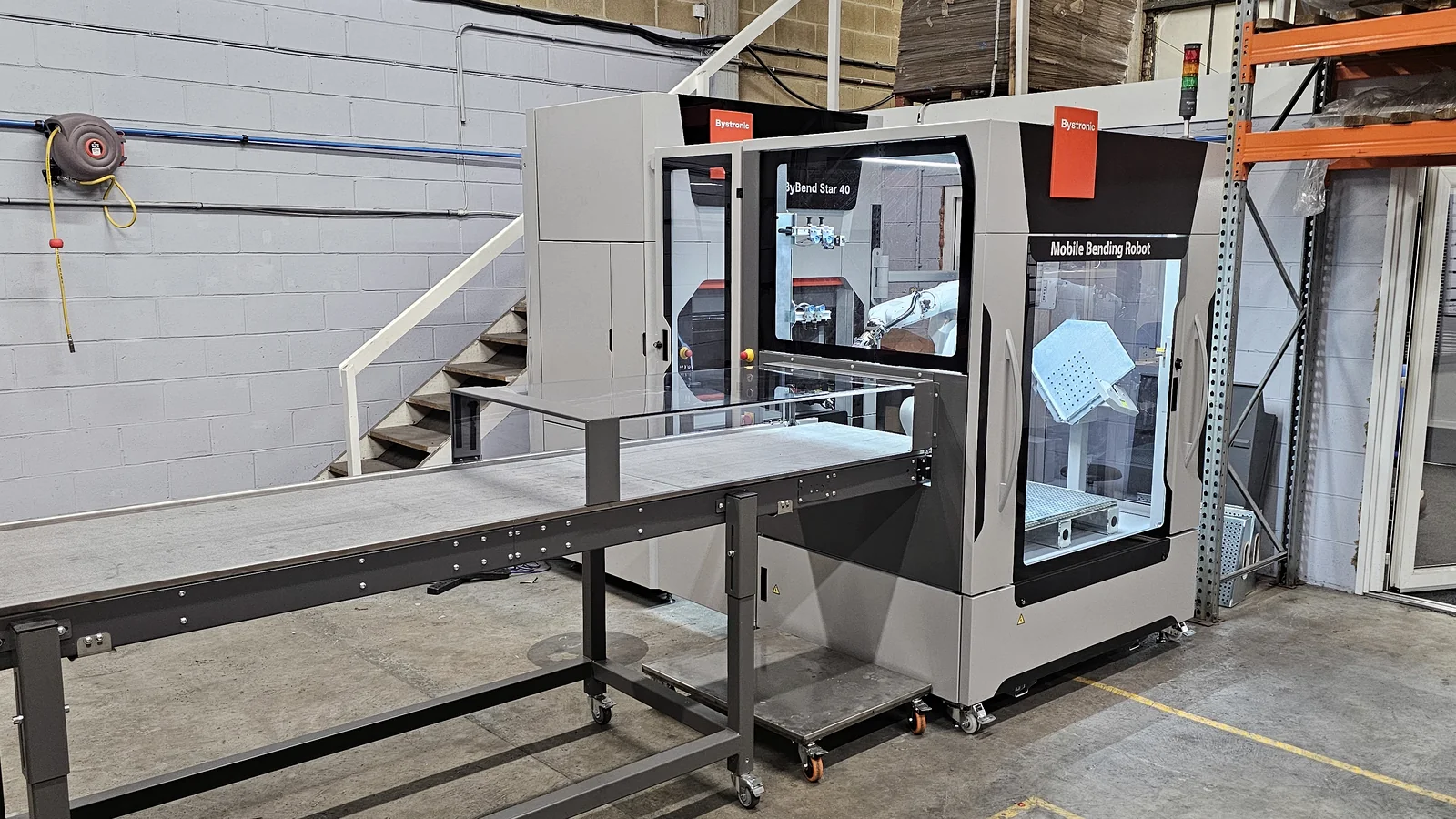
For suitable parts with high-volume repeat work, our robotic cell can automate handling for lights out production.
| Thickness | Mild steel | Stainless steel | Aluminium |
|---|---|---|---|
| 8 mm | 3,000 mm | 1,910 mm | 3,000 mm |
| 10 mm | 2,180 mm | 1,545 mm | 3,000 mm |
| 12 mm | 1,545 mm | 1,360 mm | 2,550 mm |
| 15 mm | 1,545 mm | 500 mm | 1,545 mm |
| 20 mm | 500 mm | X | X |
Designing parts for folding
Use consistent radii where possible
We program directly from STEP files: try to model parts with consistent internal bend radii, which should be roughly the same as the material thickness.
Keep features clear of the bend zone
Holes, slots and cut-outs close to a fold can stretch or distort. Move them clear when function allows, or flag them as critical so the route can be reviewed.
Add relief and allow tool access
Bend reliefs can prevent tearing or unwanted deformation at corners. Deep returns and closed shapes also need a feasible sequence and physical access for the tooling.
Dimension the finished form
For folded parts, a STEP model plus a PDF drawing is the clearest combination. Dimension the finished component and identify critical overall sizes, hole positions, angles and datums.
3D STEP files for folded parts are always strongly preferred: our software creates the flat patterns for laser cutting based on the exact bend radius produced by the selected tooling, resulting in accurate parts every time. Not sure which gauge to specify? See our sheet steel thickness guide.
Think about what follows
Specify which faces will be visible, where inserts or welds will sit, and whether the part will be powder coated. Access for hardware and joining can change the best fold sequence, while coating adds thickness around close fits.
Prototype before volume. For a new or tolerance-sensitive design, a first-off part is the most useful way to confirm fit and function before a larger batch.
From folded part to finished assembly
Bending is one stage of the route. Keep moving through the guides or send the complete requirement and let us plan it as one job.
Send the folded model and drawing
Include material, thickness, quantity, finish and the dimensions that control fit. We will review the form before confirming the route.
We deliver across Hampshire, Wiltshire, Berkshire and Dorset, and nationwide by parcel and pallet.
Request a quote Next: tapping & countersinking
Prefer to send it straight over? Send a drawing or call 01264 527 017. DXF, DWG, PDF, STEP or ZIP up to 20 MB.