
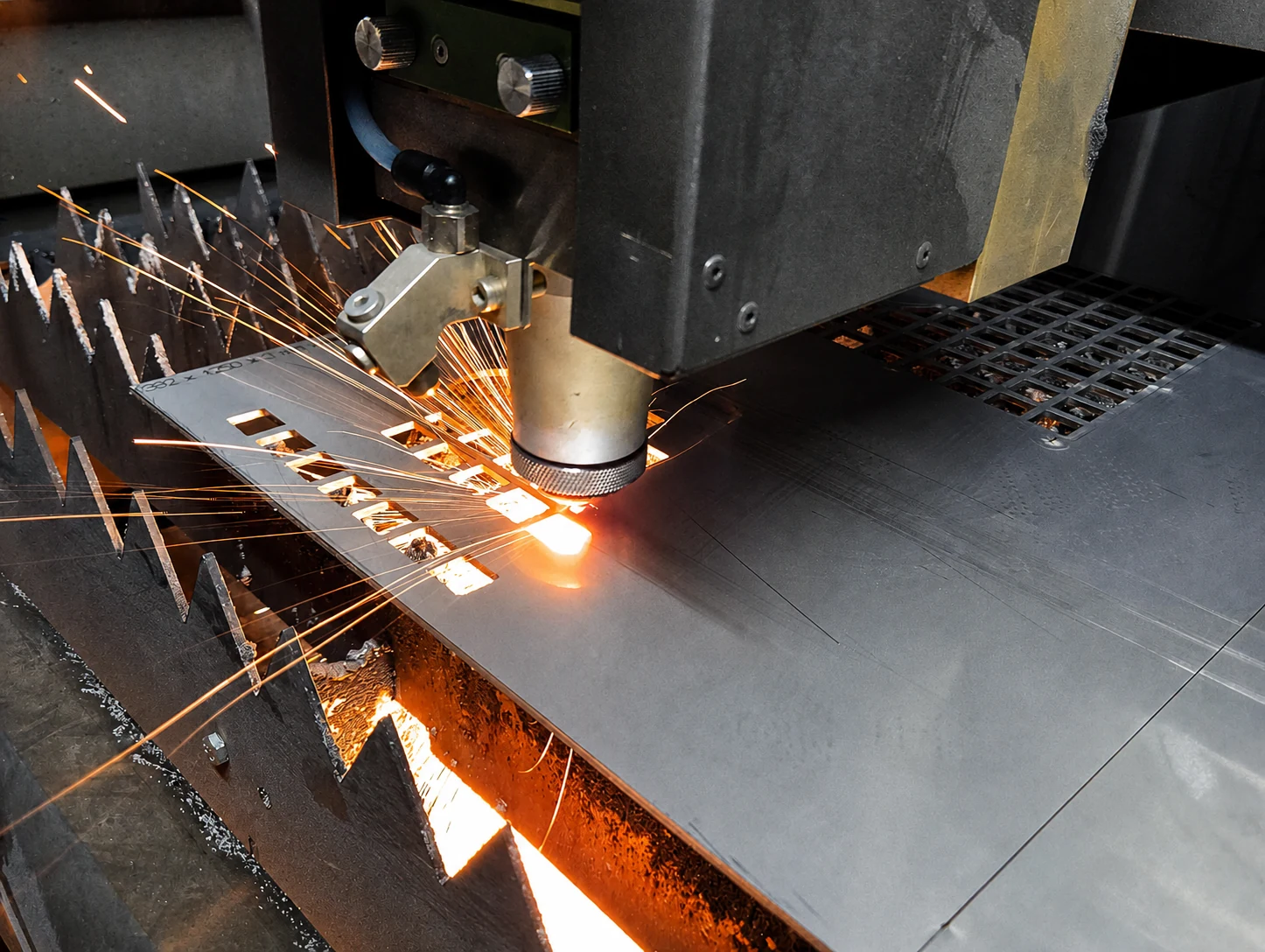
// capability 02 · accurate flat profiles
Accurate profiles. No dedicated tooling.
Our CNC fibre laser turns CAD geometry into clean, repeatable parts, then keeps them in the same workshop for bending, tapping, countersinking, fitted hardware, welding and finish. It suits one-off development work just as well as nested production batches.
What we offer
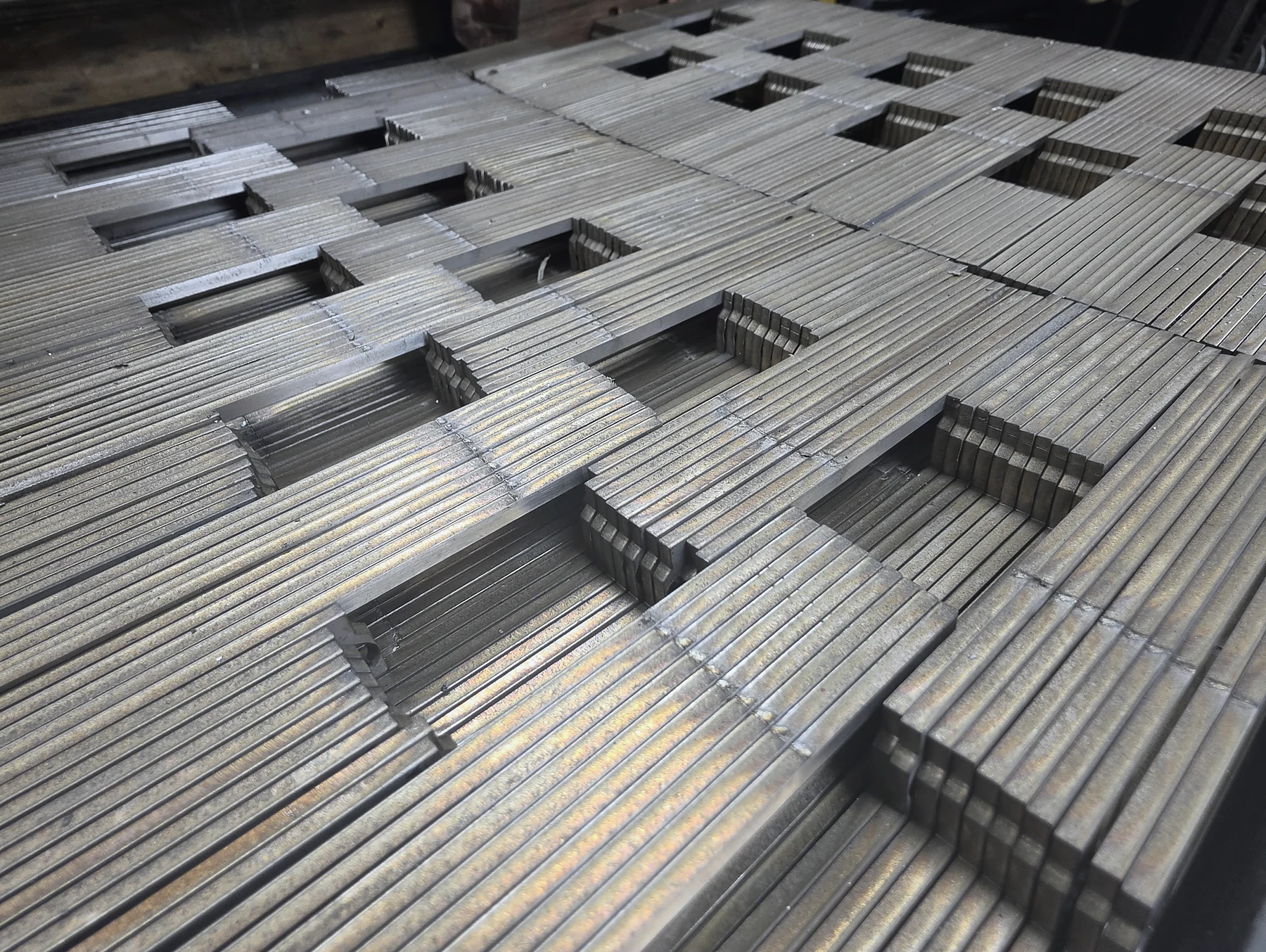
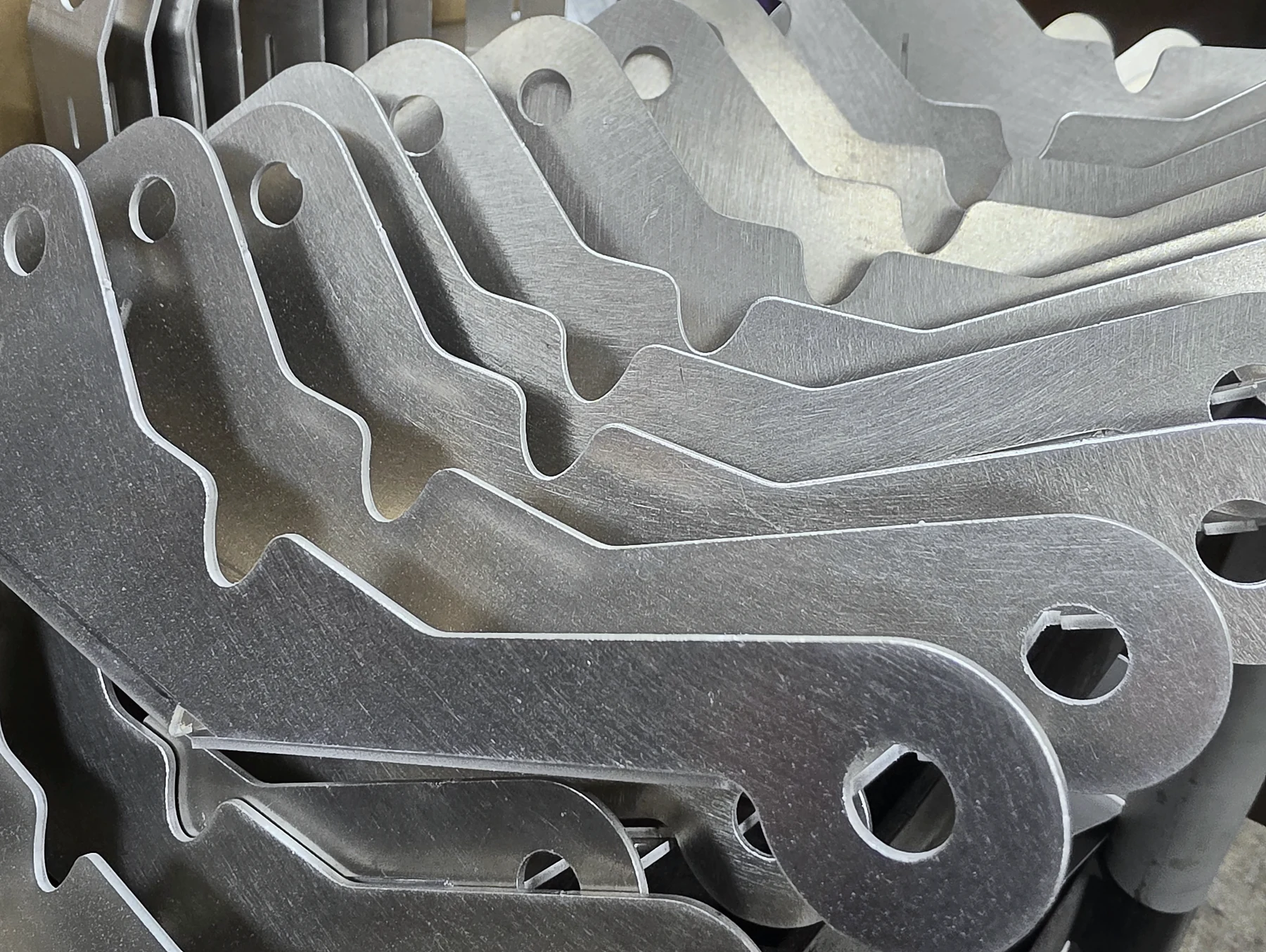
We laser cut profiles from stocked or customer-supplied sheet and plate, including brackets, panels, blanks, guards, signs, tabs, gussets and components for larger weldments. Geometry comes directly from the approved file, so there is no dedicated punch tool to make first.
The cut stage can be supplied as part of a complete Hurstbourne Forge job, with bend allowances, insert holes and assembly features considered before nesting.
Why choose fibre laser cutting?
It is a strong choice for complex flat outlines, repeated hole patterns, mixed components nested from one sheet, quick design changes and quantities ranging from one part to a production run.
Because the process is driven by CAD and needs no part-specific tooling, revisions can move quickly—provided the file clearly defines the final geometry.
Laser cutting capacity
Maximum thicknesses for the materials we cut most often. Grade, surface condition and geometry are checked when we quote.
| Material | Common grades | Maximum thickness |
|---|---|---|
| Mild steel | CR4 cold-rolled · S275 hot-rolled | 20 mm |
| Stainless steel | 304 general · 316 marine / food | 20 mm |
| Aluminium | 1050 · 5251 · 5083 | 15 mm |
| Brass | CZ108 sheet | 10 mm |
Maximum sheet size: 2995 × 1495mm. Typical profile tolerance: ±0.1–0.2mm, subject to material, thickness and feature geometry. Drawing-specific requirements are reviewed before manufacture.
Designing for laser cutting
These are practical starting points, not substitute tolerances. We check the actual material, thickness and downstream operations for every job.
Send clean, full-size geometry
For flat parts, use a 1:1 DXF or DWG with closed outlines, no duplicate lines and only the geometry that must be cut. Add a PDF drawing when dimensions, tolerances or notes matter.
Be realistic about small features
Very small holes, narrow slots and sharp internal corners become more sensitive as material gets thicker. Mark critical features and let us review them rather than building an assumption into the file.
Design for the next operation
If the part will be bent, inserted, welded or coated, hole positions, bend reliefs, edge condition and allowances should be planned as one route—not corrected after cutting.
Need flat parts only? Hurstbourne Forge uses laser cutting within a wider fabricated job. For instant online pricing and cut-only ordering, use our specialist sister service Andover Laser.
What to include with a quote
Send the file, material and grade, thickness, quantity, surface or finish requirement, and any critical tolerances. Tell us whether parts need to remain visually protected and whether they continue into forming or assembly.
What happens next
We review the file, nesting and material route, then return a price and lead time. Once approved, parts stay with the same team for any bending, tapping or countersinking, fixings, welding and finish.
Send the drawing and the full requirement
We will quote the laser stage in the context of the finished part, so downstream operations are designed in from the start.